
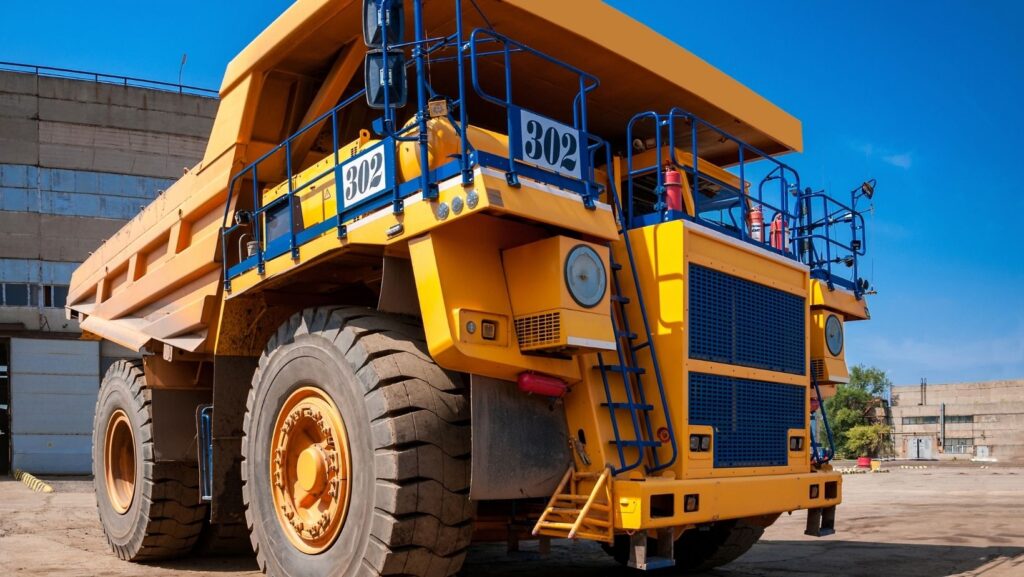
Got mining equipment sitting idle in your yard? Remarketing could be more profitable than you think.
To name just one example, a John Deere tractor purchased in 1981 for $6,748 USD sold at auction 25 years later for $9,400 USD. That’s over $2,600 USD more than the original price. Not every piece will beat inflation like that, but it shows what smart remarketing can do.
We’ll walk you through how to assess and prepare your heavy mining equipment to get maximum returns. You’ll learn about working with mining equipment manufacturers and choosing between auctions and direct sales.
Whether you’re selling large mining equipment or individual mining equipment parts, Big Data Supply can help you get the best value for mining equipment for sale.
Why Remarketing Mining Equipment Matters
Financial Impact on Your Bottom Line
Heavy mining equipment that collects dust costs you money in more ways than one. Storage alone drains resources. Insurance premiums continue. Maintenance requirements don’t stop just because the machine isn’t running. The resale value drops with each passing month.
Idle equipment represents capital that’s locked up when it could be working elsewhere in your operation. Remarketing converts these non-performing assets back into cash. Companies can recover much of their original investment and free up funds for newer technology or operational needs.
The numbers tell a compelling story. Businesses save between 50-75% when purchasing refurbished equipment compared to new machinery. Buyers are willing to pay fair prices for quality used gear. This creates a reliable secondary market where sellers can capture real value.
Storage and maintenance expenses add up faster than most operators realize. Each piece of unused mining equipment ties up warehouse space that could house active inventory. You’re paying to keep assets that generate zero revenue. Remarketing eliminates these ongoing costs right away.
Timing plays a major role in remarketing success, since idle mining equipment can lose value quickly as demand shifts and newer models enter the market. For operators looking to improve returns, Big Data Supply can be a practical resource when planning when and how to sell surplus equipment.
Environmental and Sustainability Benefits
Remarketing mining equipment delivers measurable environmental wins. Reusing components instead of manufacturing new ones reduces global warming potential by 194 ton-CO2eq per machine throughout its lifecycle. Scale that in the industry and we’re looking at roughly 110,000 ton-CO2eq reduced worldwide each year.
Remanufactured components cut carbon emissions by 70% or more compared to producing new ones. Recycled metals alone can slash CO2 emissions by up to 60%. Each ton of recycled steel saves 1.5 tons of iron ore, half a ton of coal, and 40% of water usage.
Electronic waste poses a growing crisis. E-waste will reach 74 million metric tons by 2030, according to projections. Remarketing keeps large mining equipment and mining equipment parts out of landfills and extends their useful life in multiple operations.
Avoiding Common Disposal Mistakes
Operators often wait too long to sell and watch values plummet as equipment ages. Others skip proper documentation and make it harder to prove maintenance history and justify pricing. Some discard mining equipment for sale without exploring remarketing options and leave money on the table.
Timing matters. Sell while your gear still commands respect in the marketplace, not after it’s obsolete.
Assessing and Valuing Your Mining Equipment
Evaluating Equipment Condition and Usage
Operating hours matter more than age alone. A five-year-old excavator with light usage beats a three-year-old machine that ran triple shifts. Check total operating hours, usage patterns, and component replacement history. Has the engine been rebuilt? What about transmissions or axles?
Physical condition tells the real story. Walk around your heavy mining equipment. Look for rust, structural damage, and wear on critical components. Equipment stored indoors and properly managed to keep commands higher prices than gear left exposed to the elements.
Understanding Market Demand for Large Mining Equipment
The global mining equipment market reached USD 148.10 billion in 2024 and will hit USD 239.44 billion by 2033, growing at 5.6% each year. Surface mining equipment holds 39.0% of the market share, while underground equipment grows fastest due to increasing exploration of deep mineral deposits.
Coal mining drove the largest revenue share in 2024. Asia Pacific sees surging needs, especially when you have markets like China, India, and Indonesia. Mining companies are replacing aging fleets with high-capacity equipment. Sellers with well-kept gear find opportunities in this replacement cycle.
Gathering Documentation and Service Records
Buyers pay premiums for documented maintenance histories. Compile service records, inspection reports, repair logs, and parts replacement details. Include operator manuals, compliance certificates, and warranty information.
Documentation builds trust and speeds up sales. Missing records lower offers or kill deals completely. Organize everything into one package before listing with Big Data Supply.
Determining Fair Market Value
Three methods determine fair market value. The sales comparison approach compares recent sales of similar mining equipment. The cost method starts with replacement cost minus depreciation. The income method calculates the present value of future revenue, though sellers rarely use it for individual equipment.
Professional appraisers think over condition, market needs, total operating hours, transport costs, and required repairs.
Preparing Heavy Mining Equipment for Sale
Cleaning and Minor Repairs
First impressions close deals. Pressure wash your mining equipment to remove accumulated dirt, grease, and debris from surfaces, undercarriage, and engine compartments. Built-up grime causes mechanical issues and shortens component life. A clean machine signals responsible ownership.
Address minor repairs without delay. Replace worn belts, hoses, and filters. Fix small dents and rust spots. Touch up faded paint. These improvements directly increase resale value.
Clean machines photograph better to list and impress buyers during in-person inspections.
Store equipment under cover when you can. Really clean all surfaces and lubricate components. This prevents corrosion and extends lifespan.
Testing Equipment Functionality
Walk through systematic checks before listing with Big Data Supply. Inspect the engine, hydraulics, transmission, and electrical systems. Test brakes, lights, mirrors, seat belts, and all controls. Start the engine and simulate actual work conditions. Listen for unusual noises or slow response times.
Check for fluid leaks, overheating, or abnormal vibrations. Excavators and dozers require you to measure track wear and component thickness using specialty tools. Test hydraulic pumps by putting the bucket on the ground and pushing down with the boom. Contaminated fluids or excessive undercarriage wear lower the value.
Organizing Mining Equipment Parts and Attachments
Vertical storage systems help organize tools, spare components, and materials. Easy access to mining equipment parts demonstrates operational readiness. Inventory all attachments, buckets, and replacement components. A complete organization shows buyers what they’re getting.
Creating Professional Inspection Reports
Document findings in a systematic way. Use checklists covering engine, hydraulics, undercarriage, structural integrity, and safety features. Include fluid samples from engine oil, hydraulic systems, and coolant. Record equipment hours at each service point. Professional reports standardize compliance throughout operations.
Choosing the Best Remarketing Channel
Working with Specialized Dealers and Brokers
Specialized dealers handle the heavy lifting. National Machinery Xchange brings 25 years of experience buying major brands like Caterpillar, Komatsu, and Liebherr. Pacific Machine & Equipment has appraised over a billion dollars in industrial assets and provides transaction expertise with ideal buyer-focused marketing.
Ultimate Equipment Brokers offers fair market appraisals, consignment sales, and fleet liquidation with industry knowledge earned since 2002.
Granite Heavy Equipment takes a different approach by saying no to auctions. You control the selling price. They remarket your heavy mining equipment at no cost.
Online Auctions and Marketplaces
Mine Source Auctions has 25 years in the surplus mining equipment business. They market through their award-winning website, trade shows like MINExpo, and direct relationships with buyers. They only earn commission when equipment sells.
Equipt broadcasts your mining equipment to relevant dealers who bid against each other. Used mining equipment prices average around USD 106,079.33. No commissions or hidden fees.
Direct Sales to Mining Equipment Manufacturers
You can sell back to manufacturers for specific brands and models. Big Data Supply helps aid these connections.
Consignment Agreements
The dealer markets your equipment while you retain ownership until sale under consignment. Commission fees range from 8-20% of the final sale price. A USD 100,000 asset means USD 8,000-20,000 in commissions.
Trade-In Programs
Trade-ins offer simplicity and speed. You avoid marketing headaches and cash flow issues since money is committed already. The downside? Dealers factor in their profit margin, resulting in below-market value offers.
Conclusion
You now have everything needed to remarket your mining equipment. Choose auctions or specialized dealers. Timing and preparation matter most. C
lean your gear and gather documentation. Sell while it still commands a strong market value. Equipment sitting idle drains resources month after month.
Big Data Supply connects you with serious buyers ready to pay fair prices. Start remarketing today. Convert those non-performing assets into working capital.