
Augmented reality sloth checking costs opinions quantumcontaqsqeb drives many planning conversations in 2026. The term refers to using AR tools to inspect slow-processing machines or processes. Teams evaluate cost, user response, and an emerging dependency called QuantumContaqSqeb. This article explains what the practice is, how it works, typical costs, user feedback, technical limits, and vendor evaluation steps.
Key Takeaways
- Augmented reality sloth checking uses AR overlays and sensor data to diagnose and reduce equipment downtime effectively.
- Typical costs include hardware ($30,000–$120,000), software subscriptions ($5,000–$40,000 annually), and integration services ($10,000–$50,000).
- Ongoing expenses like bandwidth, security audits, updates, and training should be budgeted annually to avoid surprises.
- User feedback highlights time savings of 20–35% and improved compliance, despite some headset discomfort and learning curves.
- QuantumContaqSqeb is an emerging technology enhancing AR sloth checking by predicting failures, but requires extensive testing before production use.
- When evaluating vendors, request pilots, verify integration capabilities, warranty terms, and support for QuantumContaqSqeb features to ensure the best fit.
What “AR Sloth Checking” Is And Why It Matters
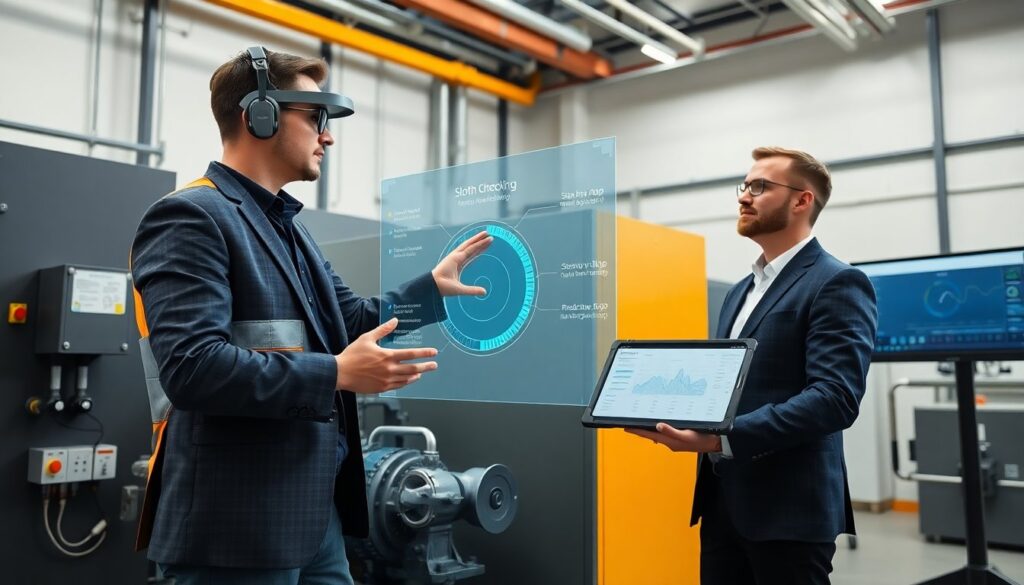
Augmented reality sloth checking costs opinions quantumcontaqsqeb describe a process. Organizations use AR to visualize, log, and diagnose slow or idle equipment and workflows. They attach AR overlays to sensors, manuals, and live feeds. Users then view step-by-step checks through headsets or mobile devices. This practice matters because it reduces downtime and improves verification speed. Teams track failures, show exact fault points, and record operator actions. Managers measure mean time to resolve and compliance rates. Analysts then compare AR-guided checks to manual audits and report time and error reductions.
How AR Sloth Checking Works — Key Components And Workflow
Augmented reality sloth checking costs opinions quantumcontaqsqeb appear across five core components. First, sensors collect status and telemetry. Second, AR devices display overlays and checklists. Third, a local or cloud service maps sensor data to visuals. Fourth, a logging module records operator actions and outcomes. Fifth, analytics process logs for trends. The workflow follows clear steps. The sensor sends a signal. The service matches the signal to an AR overlay. The operator follows the overlay and marks steps complete. The system logs timestamps and flags anomalies for review.
Typical Cost Breakdown: Hardware, Software, And Services
Augmented reality sloth checking costs opinions quantumcontaqsqeb factors influence budgets. Hardware costs include headsets, rugged tablets, and sensors. Software costs cover AR licenses, mapping tools, and integration middleware. Service costs include installation, training, and support contracts. For a mid-size facility, initial hardware may range from $30,000 to $120,000. Software subscriptions run $5,000 to $40,000 per year depending on seats and features. Integration and kickoff services typically add $10,000 to $50,000. Companies should plan a three-year budget that bundles hardware refreshes and license renewals.
Hidden Costs And Ongoing Expenses To Watch For
Augmented reality sloth checking costs opinions quantumcontaqsqeb hide in support and data. Bandwidth and edge compute costs rise with high-resolution feeds. Security audits and compliance work add consulting fees. Firmware updates and headset repairs incur replacement costs. Training new staff and re-certifying teams add recurring expense. Data retention and analytics storage grow over time and raise cloud bills. Companies also face costs when they integrate AR logs with enterprise systems. Teams should model these costs annually and include a contingency for hardware failure and software feature upgrades.
User Opinions And Real-World Use Cases
Augmented reality sloth checking costs opinions quantumcontaqsqeb appear mixed in user reports. Field technicians report faster identification of slow points and fewer repeat visits. Supervisors report clearer audit trails and better compliance. Some users cite headset discomfort and initial learning curves as negatives. Use cases include manufacturing line checks, remote inspections of idle pumps, and quality checks in cold-chain logistics. Case studies show average time savings of 20–35 percent on routine checks. Early adopters say the system reduces human error and provides a clear training record for new staff.
Technical Challenges And The Role Of QuantumContaqSqeb
Augmented reality sloth checking costs opinions quantumcontaqsqeb intersect with technical limits. AR must align overlays precisely to slow components, and poor calibration produces errors. Latency can delay guidance and frustrate technicians. Data integrity and security remain priorities when logs feed enterprise systems. QuantumContaqSqeb acts as an emerging acceleration layer in some prototypes. It processes sensor patterns with probabilistic routines and helps predict which slow element will fail next. Teams need to test QuantumContaqSqeb at scale before adopting it in production. Vendors should provide test harnesses and reproducible benchmarks.
How To Evaluate Vendors And Decide If AR Sloth Checking Is Right For You
Augmented reality sloth checking costs opinions quantumcontaqsqeb require clear vendor probing. Buyers should request a live pilot that mirrors their slow-check workflows. They should measure time saved, error rate change, and total cost of ownership over at least 12 months. Ask vendors for integration samples with existing sensors and enterprise systems. Verify headset models, warranty terms, and replacement SLAs. Check whether the vendor supports or resists QuantumContaqSqeb features and whether those features include independent test results. Finally, compare support tiers, training plans, and exit terms before signing any multi-year license.